Google Doesn't Use llms.txt: 7 AI SEO Myths Google Busted Live on Stage
llms.txt, Markdown pages, "rank #1 to get cited": Google ran a live true-or-false on AI SEO myths in Bengaluru. Here's every verdict, with the slides.

By Bhavishya Jain, Organic Growth and AI Search Specialist
Published , 3 minute read
In this article
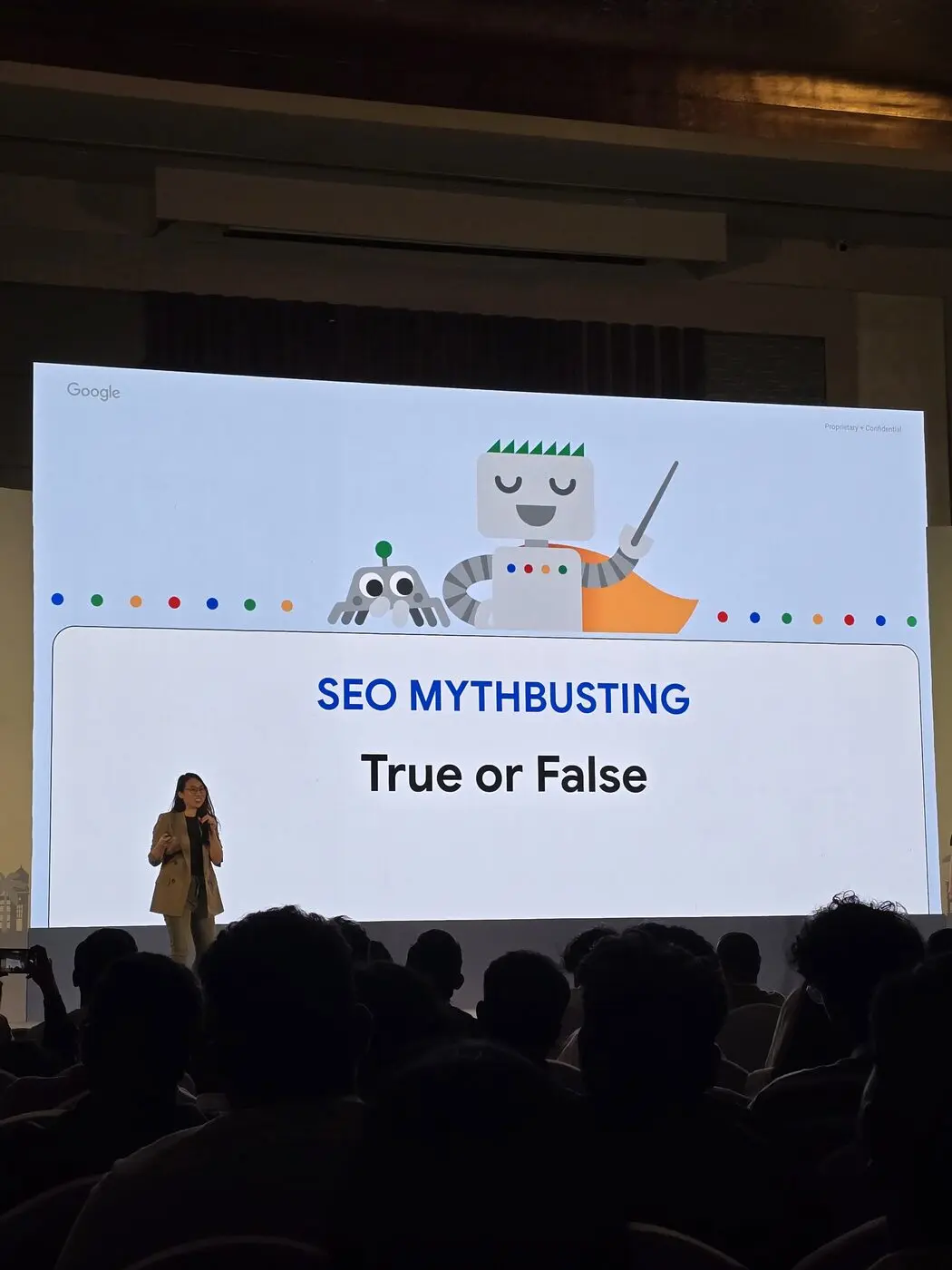
A lot of “AI SEO” advice is being sold right now: llms.txt files, Markdown copies of pages, tricks to get cited by AI. At Search Central Live in Bengaluru on 30 October 2026, the Google Search team ran a true-or-false session on the most popular claims.
Most of them were false. Here’s every verdict, with the slides.
Myth 1: llms.txt tells Google’s AI crawlers what to do
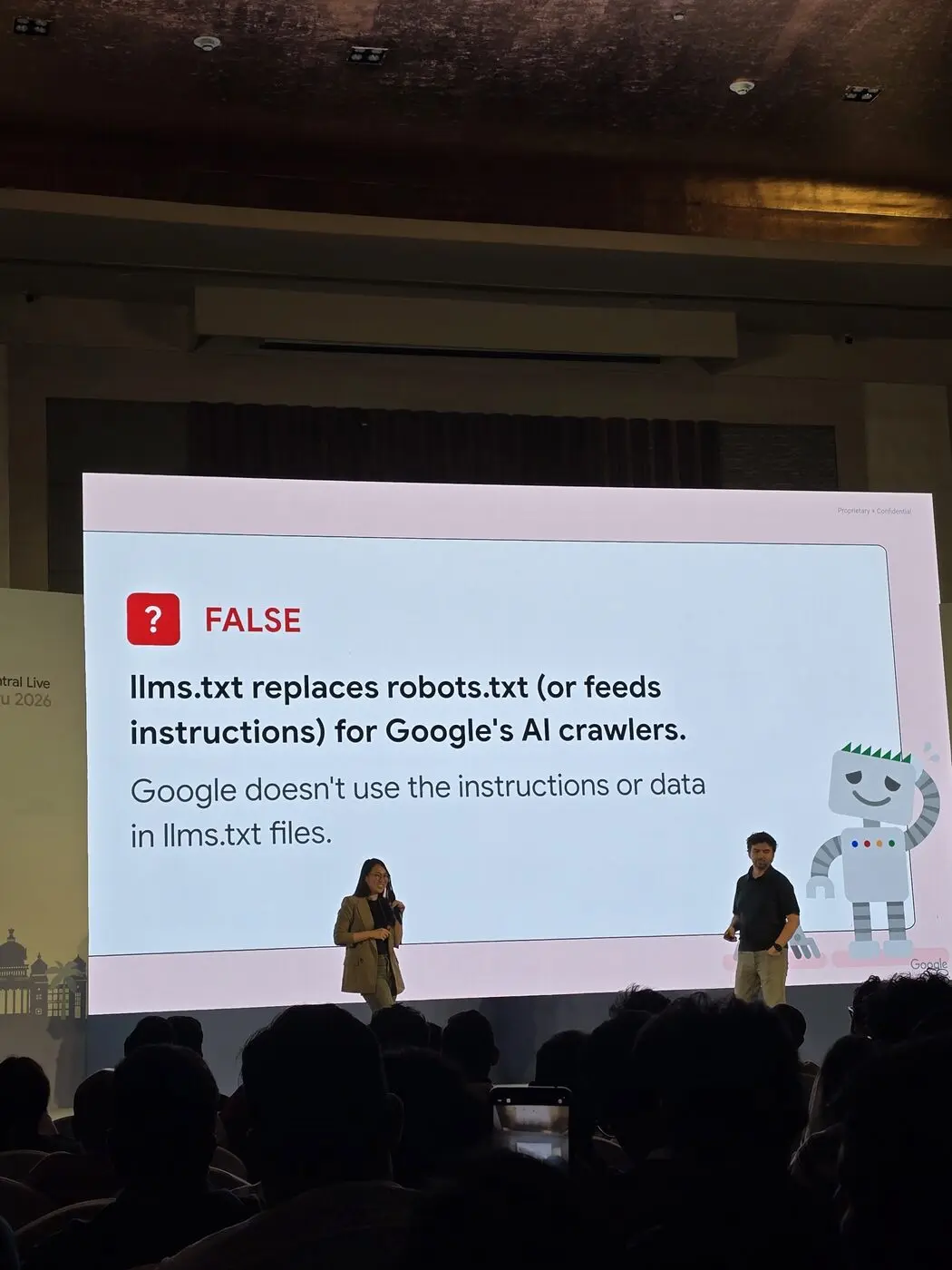
Verdict: False. Google doesn’t use the instructions or data in llms.txt files. Earlier in the day, Google also said llms.txt isn’t necessary to appear in its AI features.
What to do instead: robots.txt is still the file Google reads. Spend the time on making real pages crawlable.
Myth 2: Google prefers clean Markdown over HTML
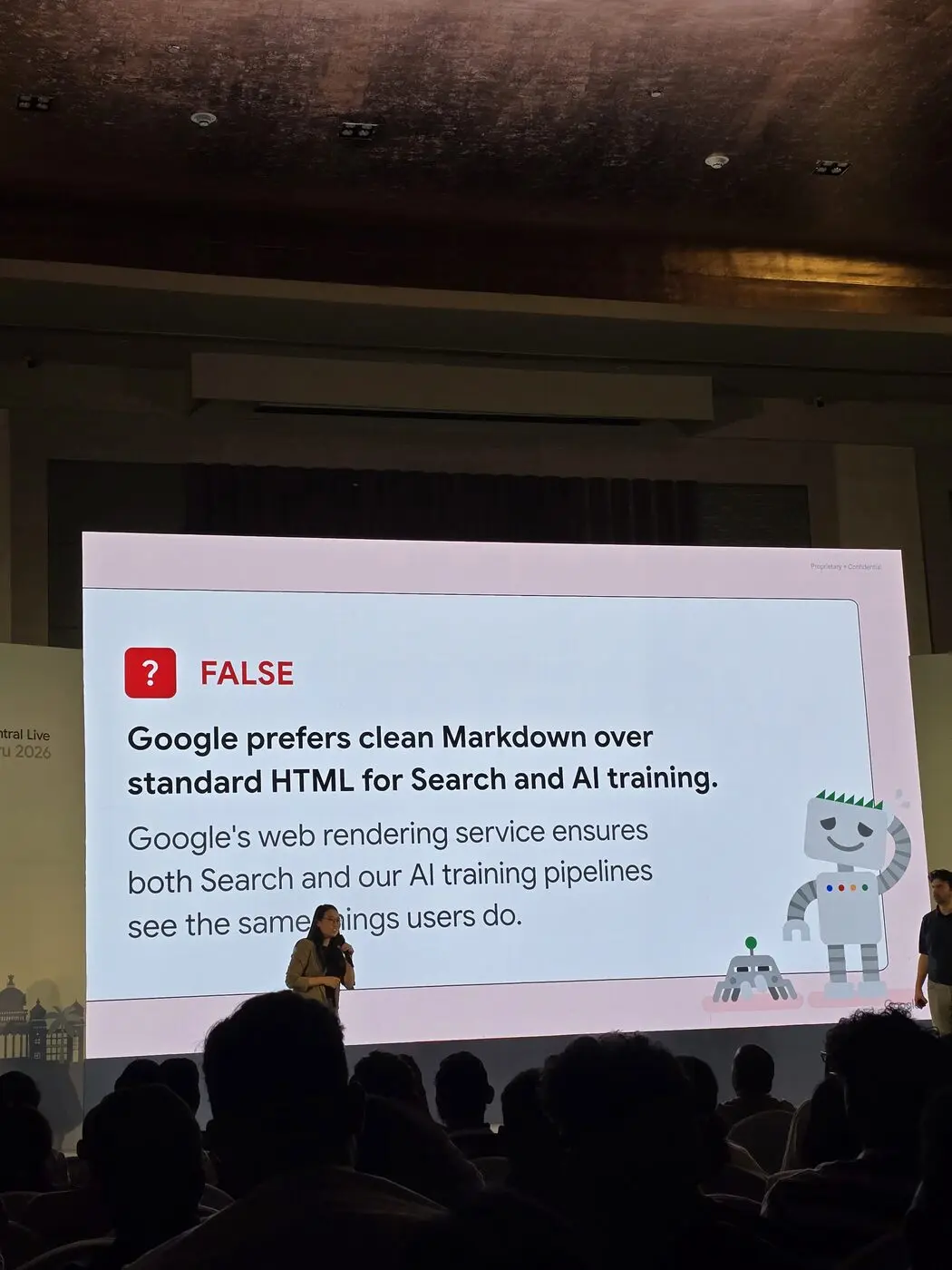
Verdict: False. Google’s web rendering service makes sure both Search and its AI training pipelines see the same things users see.
What to do instead: don’t build Markdown copies for bots. Make sure your rendered page shows the content to users and Googlebot alike.
Myth 3: rank #1 and AI will cite you
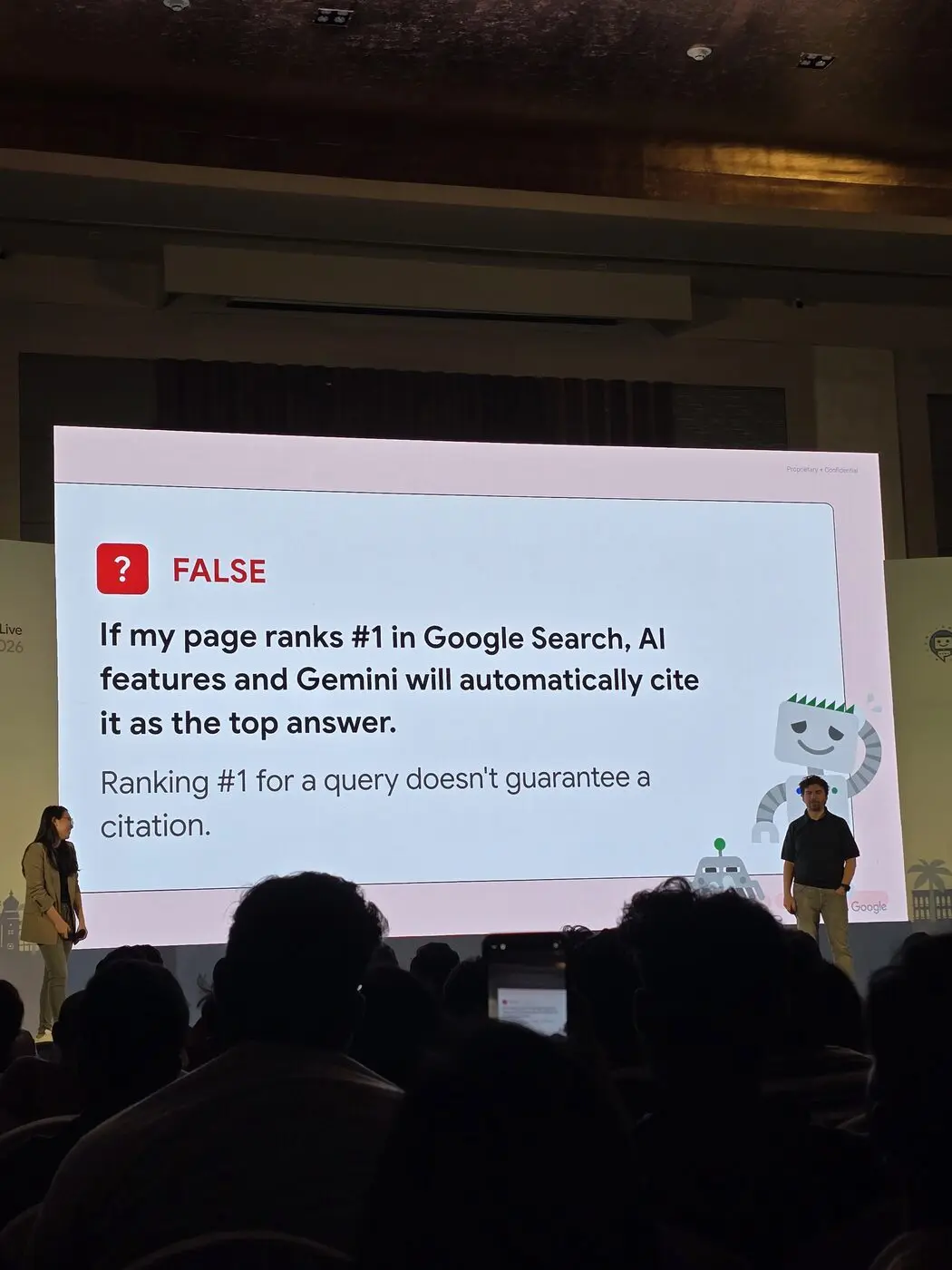
Verdict: False. Ranking first for a query doesn’t guarantee a citation.
Why: AI features use query fan-out, so they pull from pages that answer the related sub-questions too, not just the top result for the original query.
Myth 4: AI only cites Wikipedia, Reddit and big media
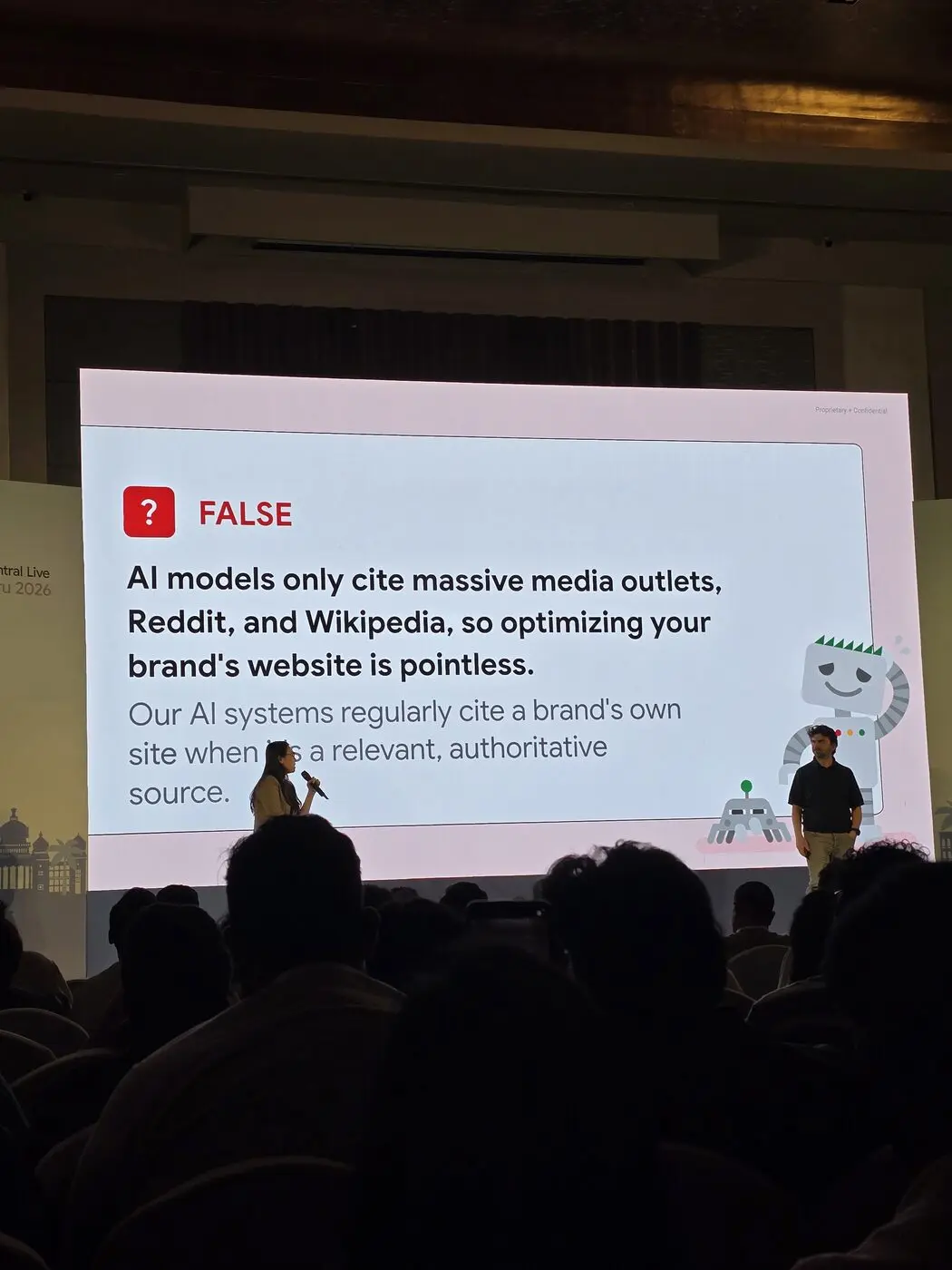
Verdict: False. Google said its AI systems regularly cite a brand’s own site when it’s a relevant, authoritative source.
What to do instead: make your own site the best source on what you know: your product, your data, your process.
Myth 5: AI scrapers eat your crawl budget
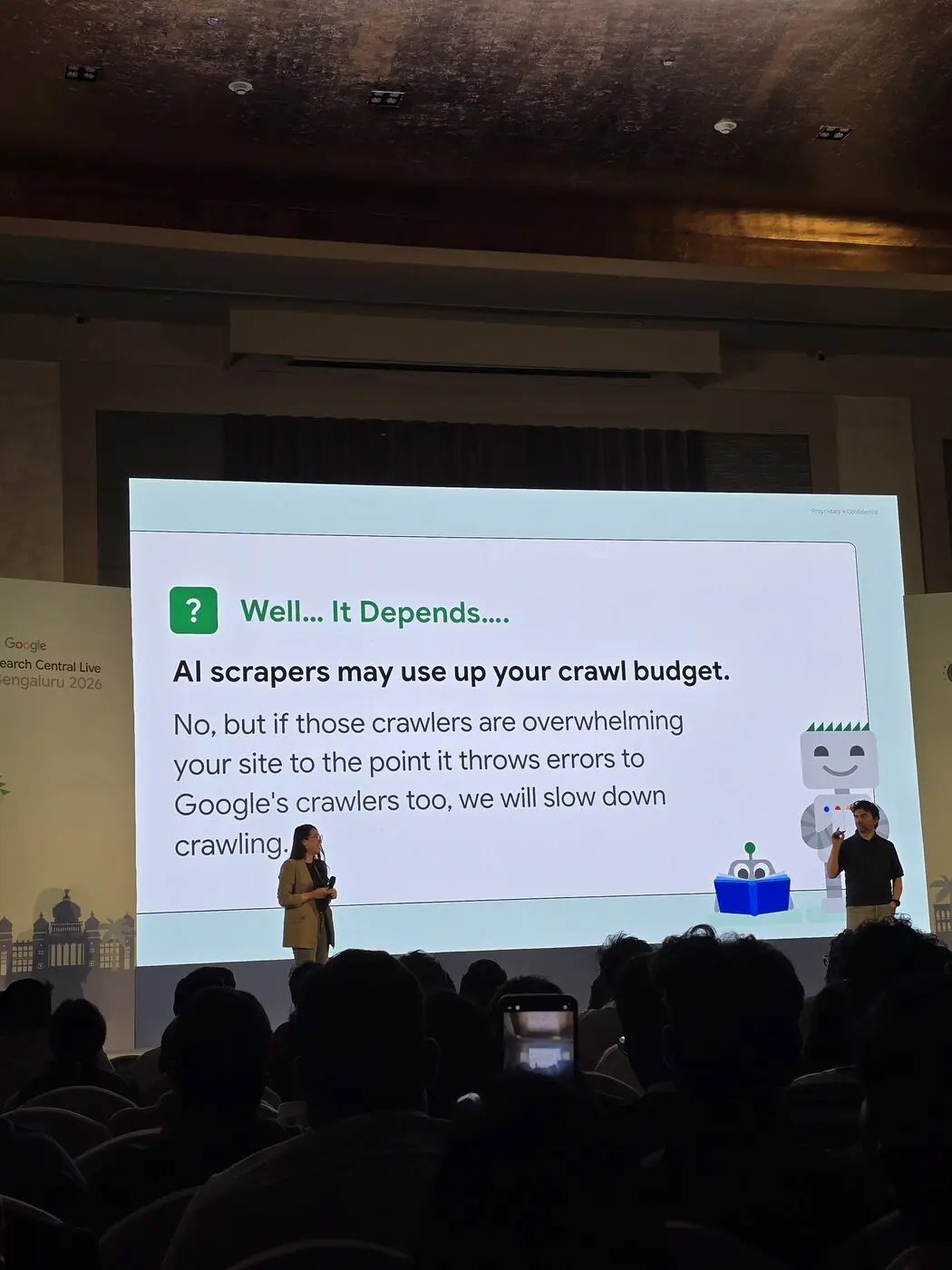
Verdict: It depends. AI scrapers don’t use your Google crawl budget. But if they overload your server until it throws errors to Googlebot too, Google slows down crawling.
What to do: rate-limit aggressive non-search bots, and alert on 5xx errors served to Googlebot.
Myth 6: Gemini “indexes” content the same way Search does
Verdict: False. Search and Google’s LLMs share similar crawling and data-processing pipelines early on, but the end products are very different.
Myth 7: blocking Google-Extended removes you from AI search
Verdict: False. Disallowing Google-Extended keeps URLs out of future Gemini training and grounding in Gemini Apps and Vertex AI. It doesn’t un-train existing models, and it isn’t the control for AI Overviews or AI Mode. Here’s what Google-Extended and the new Search Console AI setting each do.
The one claim Google marked true
“Writing content for humans is still what works best for Google’s AI systems.” Verdict: True. Google said its systems, whether Search or AI, understand content created for humans, and told the room to stick to that.
All verdicts at a glance
| Claim | Verdict |
|---|---|
| llms.txt instructs Google’s AI crawlers | False |
| Google prefers Markdown over HTML | False |
| Rank #1 and AI will cite you | False |
| AI only cites big media, Reddit and Wikipedia | False |
| AI scrapers use up your crawl budget | It depends |
| Gemini indexes content the same way as Search | False |
| Blocking Google-Extended removes you from AI search | False |
| Writing for humans works best for Google’s AI | True |
FAQ
Does Google use llms.txt?
No. Google said it doesn’t use the instructions or data in llms.txt files.
Should I create Markdown versions of my pages for AI?
Not for Google. Its rendering service ensures Search and AI training see what users see.
How do I get cited in AI Overviews?
Google’s answer: be a relevant, authoritative source that’s crawlable and indexed, and write for people.