Google Discover in 2026: The 4 Gates Every Article Must Pass (and India's Clickbait Crackdown)
There's no Discoverbot. Google's Discover team explained the 4 gates every article passes, the feed's shift to fresh creator content, and India's clickbait cleanup.

By Bhavishya Jain, Organic Growth and AI Search Specialist
Published , 4 minute read
In this article
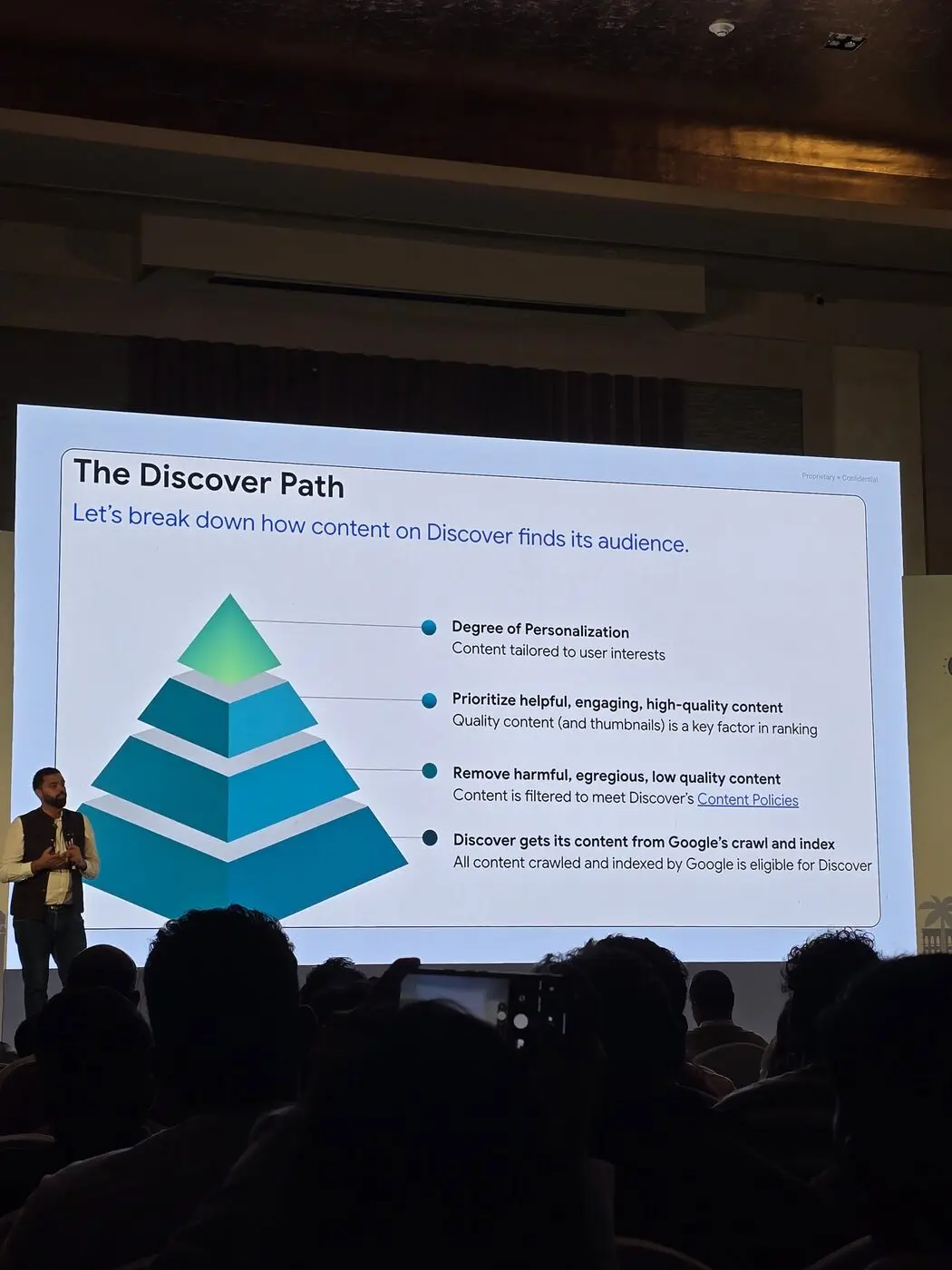
Google Discover can send more traffic in a day than search sends in a month, then go silent. At Search Central Live in Bengaluru, Google’s Discover team explained exactly how content gets into the feed, what filters it out, and where the feed is heading.
The short version: Discover is a series of gates, not a hack. Here they are.
Gate 1: be indexed (there’s no Discoverbot)
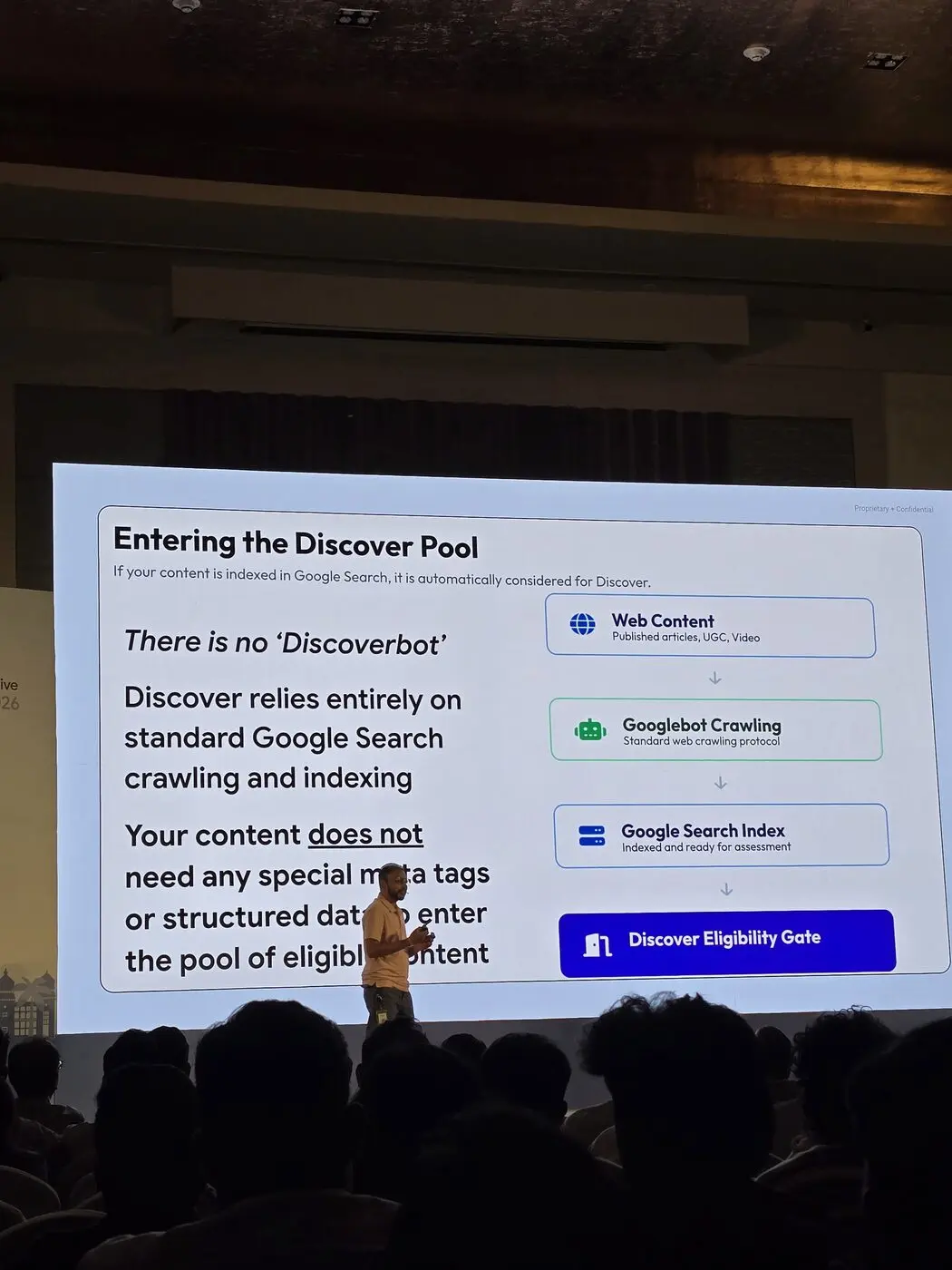
There’s no separate Discover crawler. Discover relies entirely on standard Google Search crawling and indexing. Your content doesn’t need special meta tags or structured data to enter the pool. If it’s indexed in Google Search, it’s automatically considered for Discover.
Check: if your articles take days to get indexed, that’s your Discover problem, not your headline. A free site audit will flag noindex tags and broken pages that slow indexing down.
Gate 2: pass Discover’s content policies
Content that violates Discover’s core policies is filtered out immediately. Two policies matter most for publishers:
- No misleading previews. The headline and image shouldn’t promise details the article doesn’t deliver.
- Transparency. Readers want to know who publishes and who writes: author information, publication details and contact information.
Gate 3: pass the E-E-A-T check
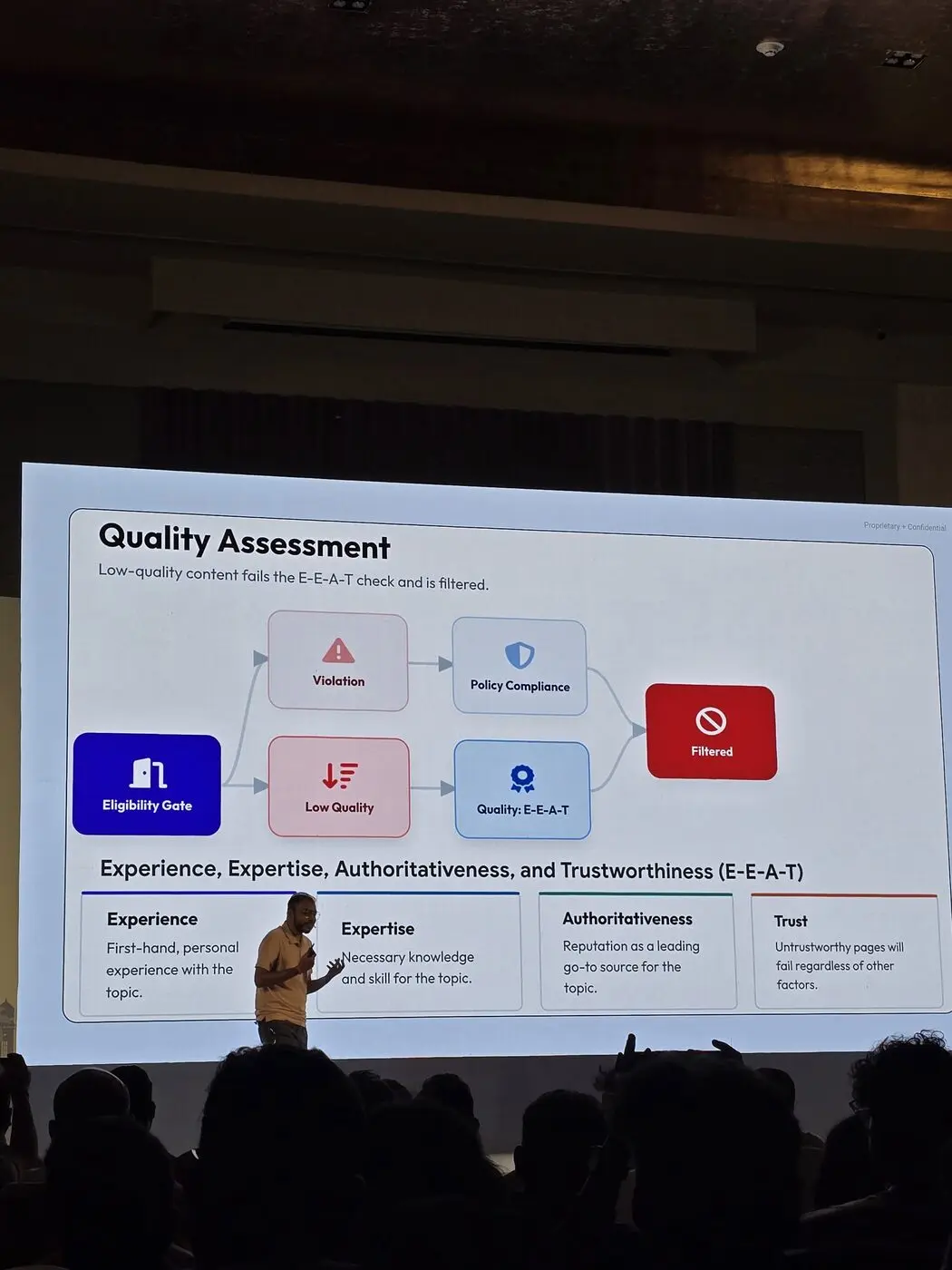
Low-quality content fails Discover’s E-E-A-T check and is filtered:
| Signal | What Google looks for |
|---|---|
| Experience | First-hand, personal experience with the topic |
| Expertise | The knowledge and skill the topic needs |
| Authoritativeness | A reputation as a leading source on the topic |
| Trust | The deciding factor: untrustworthy pages fail regardless of other factors |
Gate 4: win the click (quality and images)
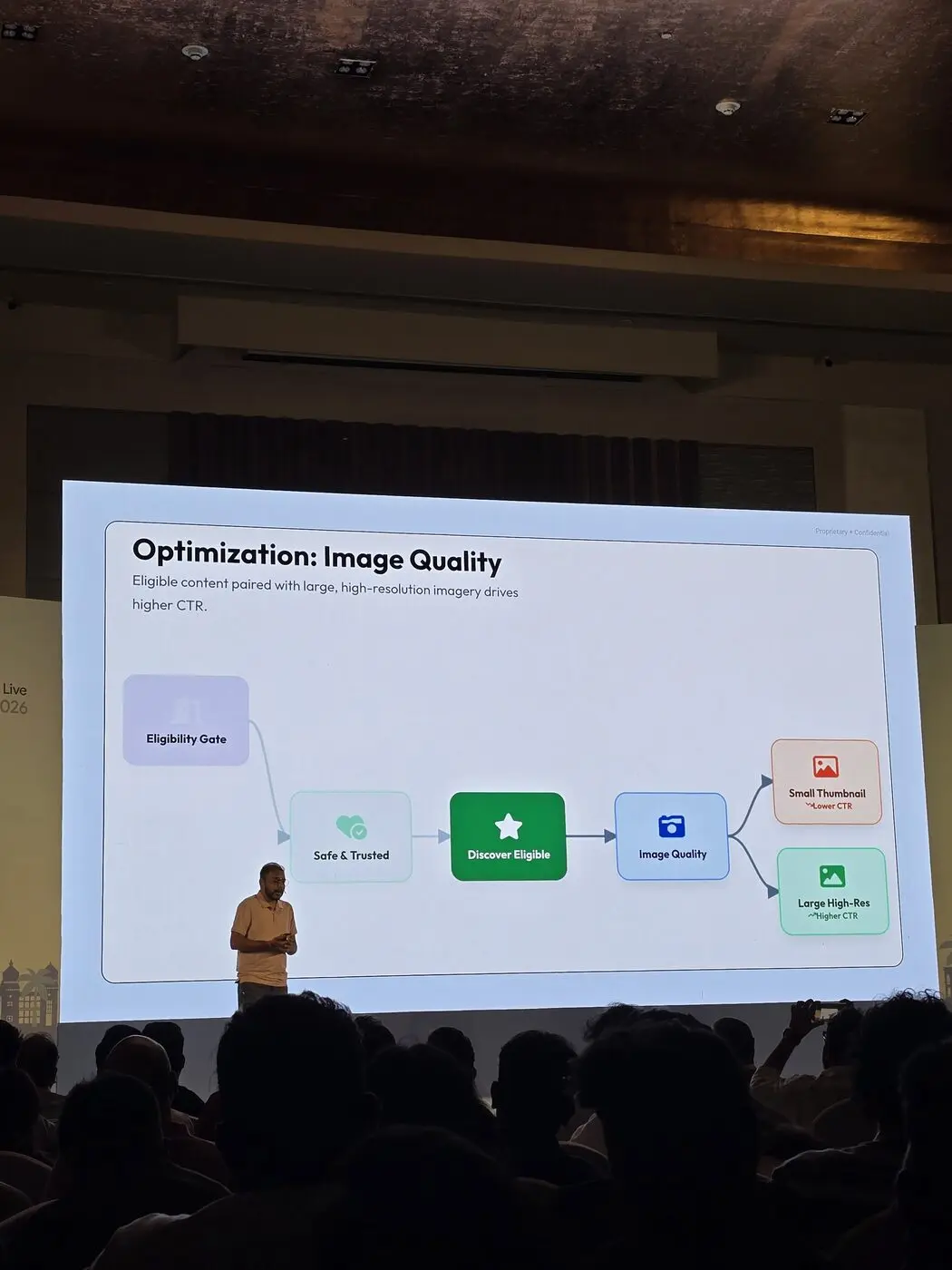
Once eligible, quality content and thumbnails are key ranking factors. Google’s slide was blunt: content paired with large, high-resolution images drives higher CTR, and small thumbnails lower it.
Do this: use a large hero image on every article (at least 1200px wide), and make sure your site allows large image previews.
Where the feed is heading
Google laid out how Discover is changing:
| Before | Now | |
|---|---|---|
| Experience | Article-centric feed | Multi-format feed |
| Content | Evergreen articles, limited video | Fresh (under 48 hours), creator-inclusive, multi-format |
| Images | Low resolution | High resolution |
| Personalization | Broad interests from search queries and topics | Recommendations from the publishers and creators you like |
Two implications: freshness now matters a lot, and Discover is building around people and brands, not just articles. Google also showed creator profiles with analytics, and a feed users can personalise in natural language.
Case study: India’s clickbait crackdown
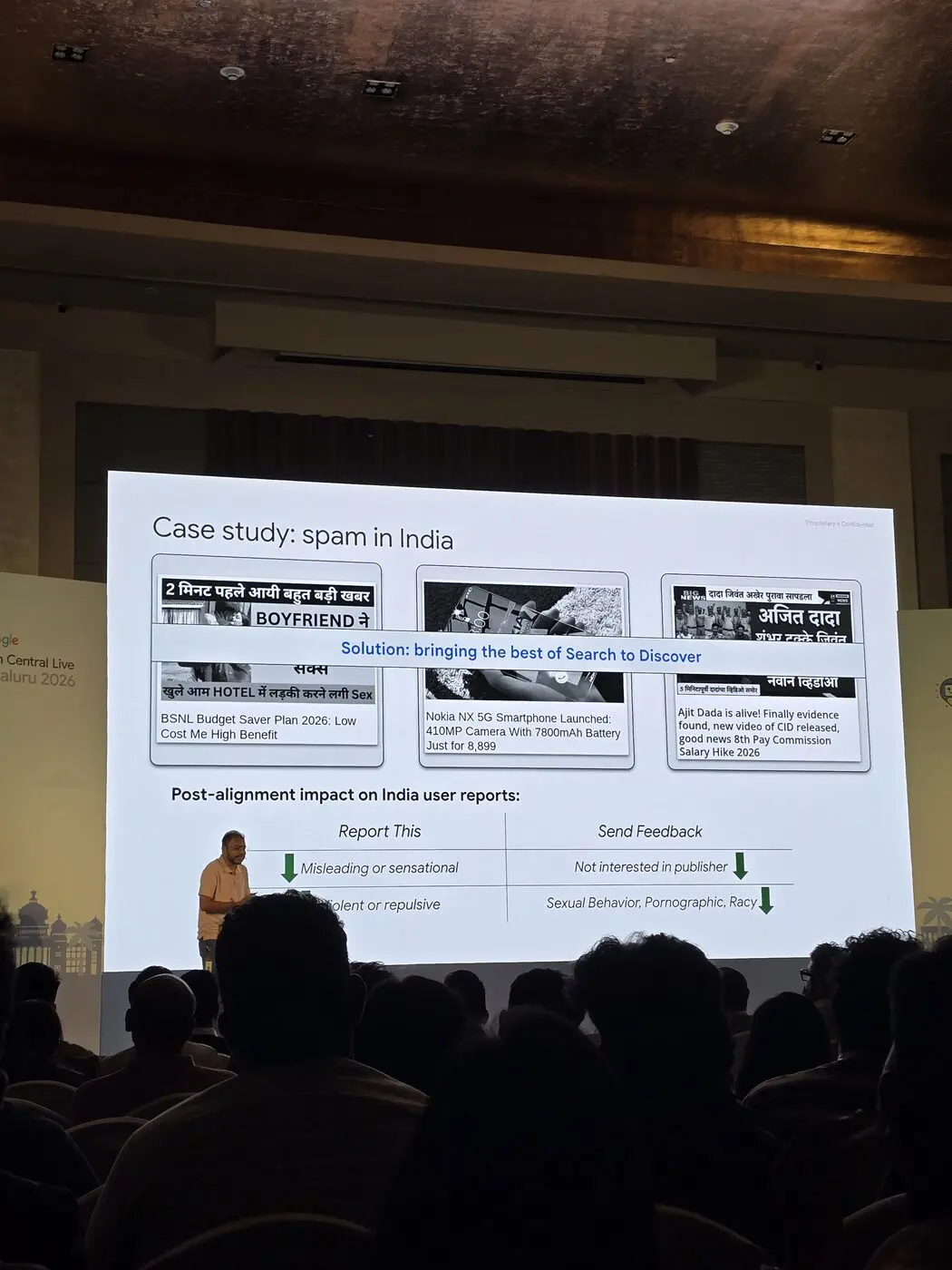
Google showed real examples of Hindi and English headlines that used to circulate in Indian Discover feeds: fake “breaking news”, sensational personal stories, and “phone launched for just ₹8,899” style bait. It grouped them into three problems:
- Misleading content
- Highly templated, low added-value content
- Generated imagery used to mislead users on consumer and civic topics
The fix was bringing the best of Search to Discover: applying Search’s quality systems to the feed. Google said user reports in India improved after the change. User feedback, like “Not interested” and “Misleading or sensational”, also feeds back into the system.
The lesson for Indian publishers: templated, AI-generated, curiosity-bait stories are exactly what’s being filtered now. Original reporting with a named author is what’s left standing.
Your Discover checklist
- Articles get indexed within hours, not days.
- Every article has a named author with a bio and an author page.
- The site shows publisher details and contact information.
- Headlines and images match what the article delivers.
- Every article has a large, high-resolution hero image.
- You publish on a steady rhythm, so fresh content is always in the pool.
- Your publication has a claimed Search Profile and asks readers to follow it.
For everything else Google covered that day, read my 10 strategic shifts from Search Central Live Bengaluru.
FAQ
How do I get my site on Google Discover?
There’s no application or special markup. If your content is indexed in Google Search and passes Discover’s policies and quality checks, it’s eligible.
Does Discover need structured data?
No. Google said content doesn’t need special meta tags or structured data to enter the Discover pool.
Why did my Discover traffic drop?
Common causes are misleading previews, weak trust signals, small images, or stale content as the feed shifts to fresh, creator-led stories. Check the Search Status Dashboard for Discover updates too.