Query Fan-Out Explained: How Google's AI Mode Chooses Which Pages to Cite
What query fan-out is, how Google's AI Mode and AI Overviews use it to choose sources, and a simple method to make your pages the answer to every sub-question.

By Bhavishya Jain, Organic Growth and AI Search Specialist
Published , 4 minute read
In this article
When someone asks Google’s AI Mode a question, it doesn’t just look up that question. It quietly breaks it into several related searches, finds the best page for each, and builds one answer from them. Google calls this query fan-out.
It’s the single most useful concept for understanding why a page gets cited in AI Mode or AI Overviews, and why the page that ranks #1 often doesn’t. Here’s how it works, based on what Google explained at Search Central Live Bengaluru 2026.
Where AI sits in Google Search
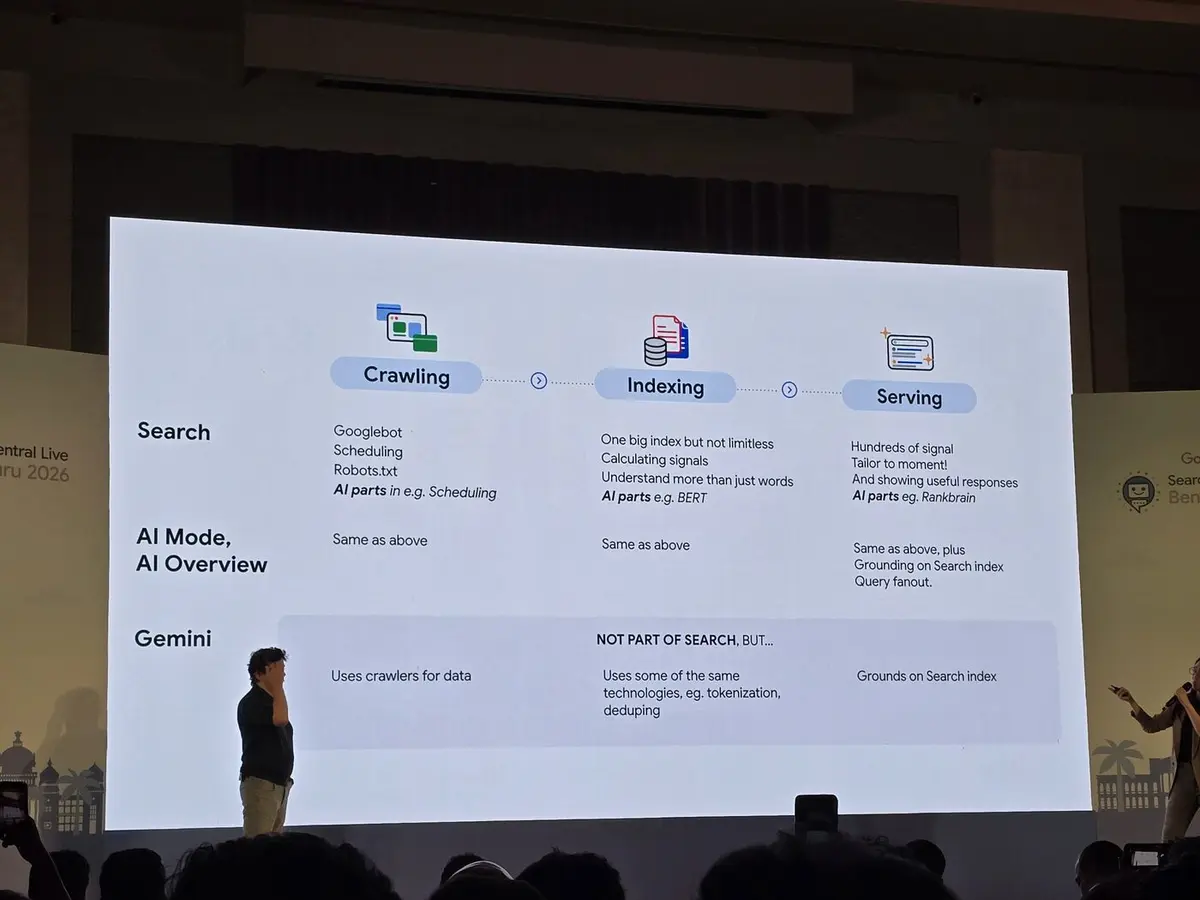
Google’s slide put Search, AI Mode and AI Overviews, and Gemini side by side across the three stages:
| Stage | Google Search | AI Mode and AI Overviews |
|---|---|---|
| Crawling | Googlebot, with AI used in parts like scheduling | Same as Search |
| Indexing | One big index; signals calculated; AI such as BERT used to understand pages | Same as Search |
| Serving | Hundreds of signals; AI such as RankBrain used to interpret queries | Same as Search, plus grounding on the Search index and query fan-out |
Gemini, the standalone assistant, isn’t part of Search, but it also grounds on the Search index. The takeaway: there’s no separate “AI index” to optimise for. Fan-out and grounding are the only new layers.
What query fan-out is
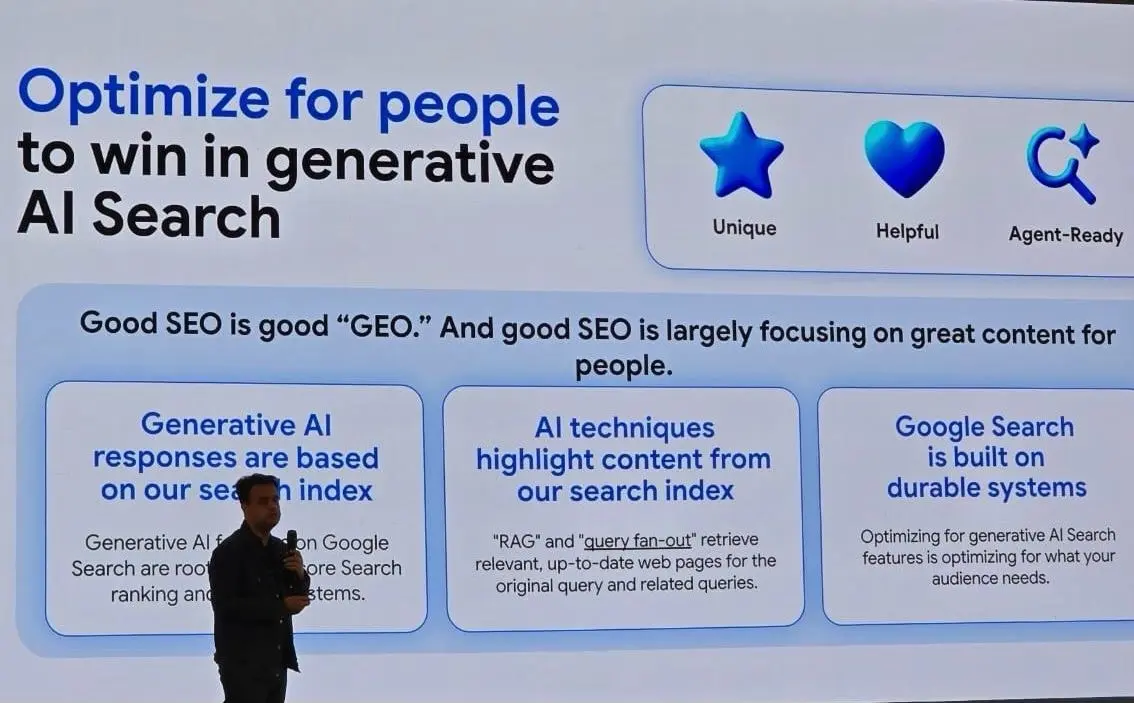
Google’s definition, from the slide above: “RAG” and “query fan-out” retrieve relevant, up-to-date web pages for the original query and related queries. In practice, it works in four steps:
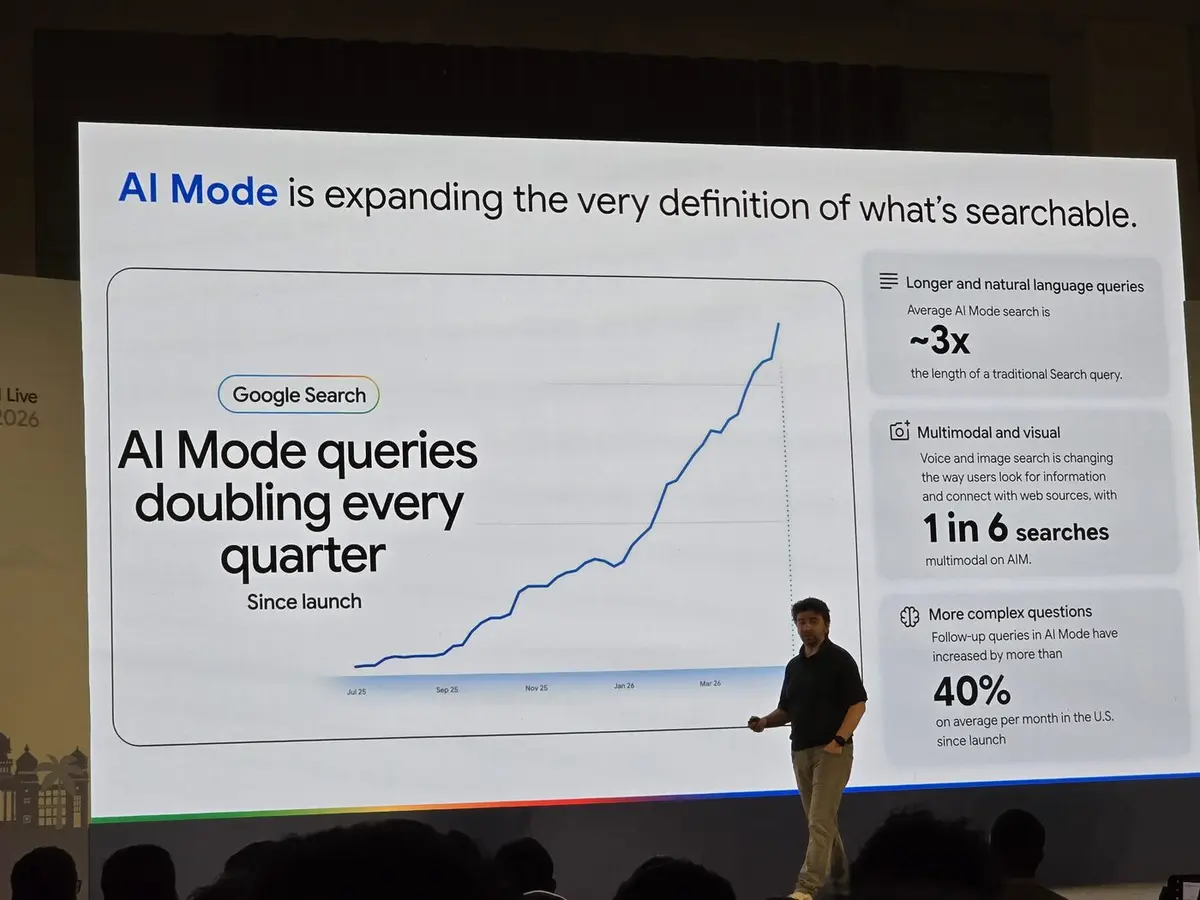
- The user asks one question. Often long and specific: AI Mode queries are about 3x longer than classic searches.
- AI expands it into sub-queries. The system runs related searches the user never typed.
- Each sub-query retrieves pages from the Search index. The same ranking and quality systems pick them.
- The answer is grounded in those pages. The response is built from them, with links to the sources.
Why this changes SEO strategy
Three consequences matter most:
- You can be cited for a query you never targeted. If your page is the best answer to one sub-question, it can appear in the answer to a much broader question.
- Ranking #1 doesn’t guarantee a citation. Google said so directly. The top page for the original query may lose to pages that answer the sub-questions better.
- Thin coverage loses. A page that answers only the headline question leaves every related question to someone else. Follow-up queries in AI Mode are growing 40%+ a month in the US.
The fan-out mapping method
Here’s a simple way to plan for fan-out. Take one important query and write down the sub-questions an AI would likely run to answer it well.
Example query: “Which data science course should I take as a working professional?”
| Likely sub-question | Page that should answer it |
|---|---|
| What do data science courses usually cover? | Curriculum or syllabus page |
| How long does it take to complete one part-time? | Course format and schedule page |
| What does it cost, and is there financing? | Pricing page with clear numbers |
| Is it worth it for career switchers? | Outcomes page with real alumni data |
| What do learners say about it? | Reviews or case studies page |
| How does it compare with alternatives? | An honest comparison page |
Then check three things for each row:
- Does a page on your site answer it directly, near the top?
- Is that page crawlable, indexed and the canonical version?
- Does it offer something an AI can’t average from other sites: your data, your process, your opinion?
This is the same demand-first thinking behind programmatic SEO: map the questions people actually ask, then make sure one strong page answers each.
What doesn’t help with fan-out
- Chopping content into fragments. Google said there’s no need to chop content for AI.
- llms.txt or Markdown copies. Google said it doesn’t use llms.txt, and its rendering sees what users see. More in 7 AI SEO myths Google busted.
- Keyword stuffing for long queries. Google’s ML ranking systems are trained on content by humans, for humans, and understand natural writing better.
Search is getting more conversational
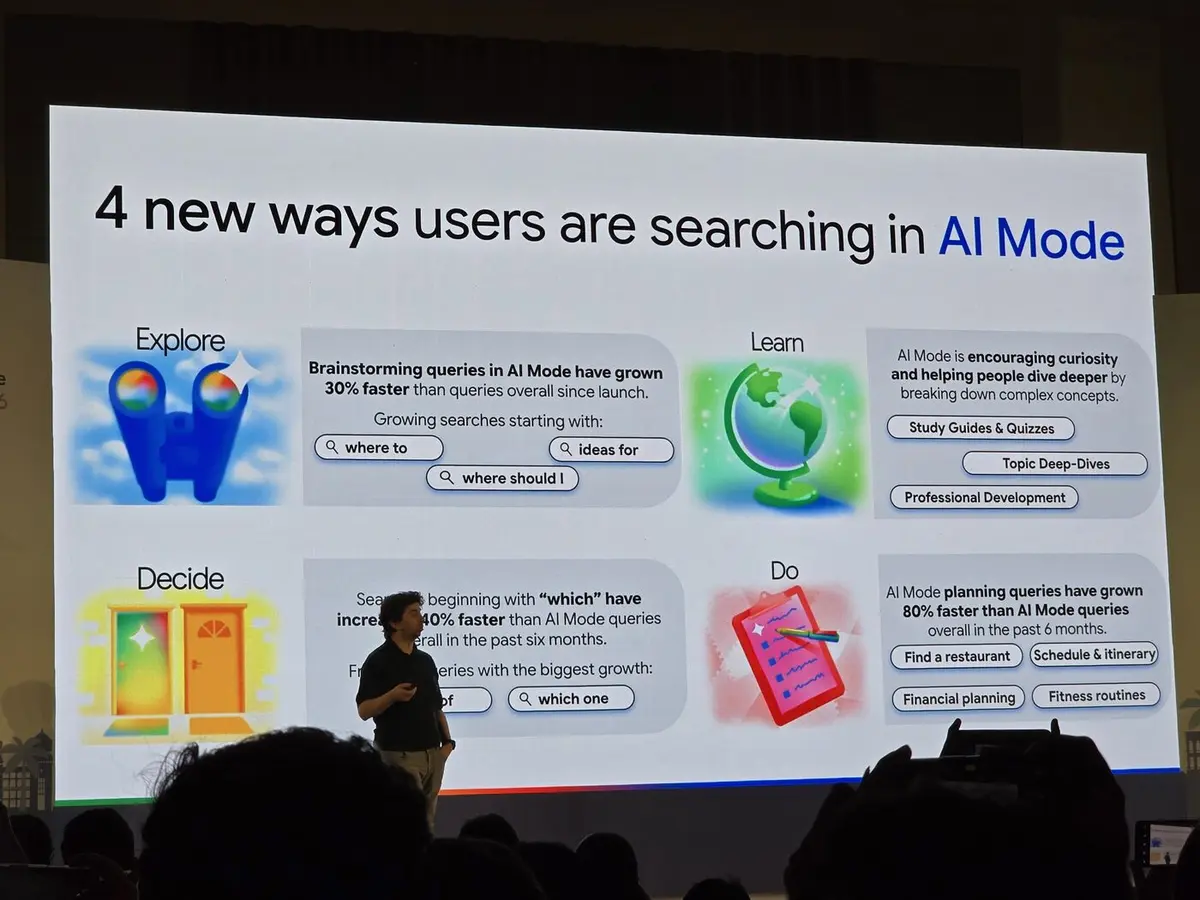
Google showed four new ways people use AI Mode: explore, learn, decide and do. Searches starting with “which” grew 40% faster than AI Mode overall in six months, and planning queries grew 80% faster. Those are exactly the queries that fan out the most.
FAQ
What is query fan-out?
It’s how Google’s AI Mode and AI Overviews expand one question into related sub-queries, then retrieve pages from the Search index to answer them.
Is there a separate index for AI Mode?
No. Google said crawling and indexing are the same; AI adds grounding and fan-out at serving time.
Why isn’t my #1 ranking page cited in AI Overviews?
Ranking first for the original query doesn’t guarantee a citation; fan-out also pulls pages that best answer related sub-questions.